
Medical Disclaimer
The information presented in this article about Modafinil for Brain Fog is for educational and informational purposes only. It does not replace professional medical advice, diagnosis, or treatment.
Modafinil is a prescription medication and should be used only under the guidance of a licensed healthcare professional. Because individual health needs differ, a qualified provider is best placed to determine whether this or any other treatment approach is appropriate based on your medical history and current symptoms.
If you have questions about cognitive symptoms, sleep disorders, or any medication discussed here, consult your physician or another qualified healthcare provider before making health-related decisions.
Modafinil for Brain Fog is often discussed by people who feel mentally drained, unfocused, or persistently “foggy.” However, while healthcare authorities approve Modafinil for specific sleep disorders, its role in brain fog depends heavily on why symptoms occur. Therefore, this guide explains where alertness may improve, what the limitations are, and which safer, root-cause strategies can support clearer thinking.
What Is Brain Fog? A Clinical Overview
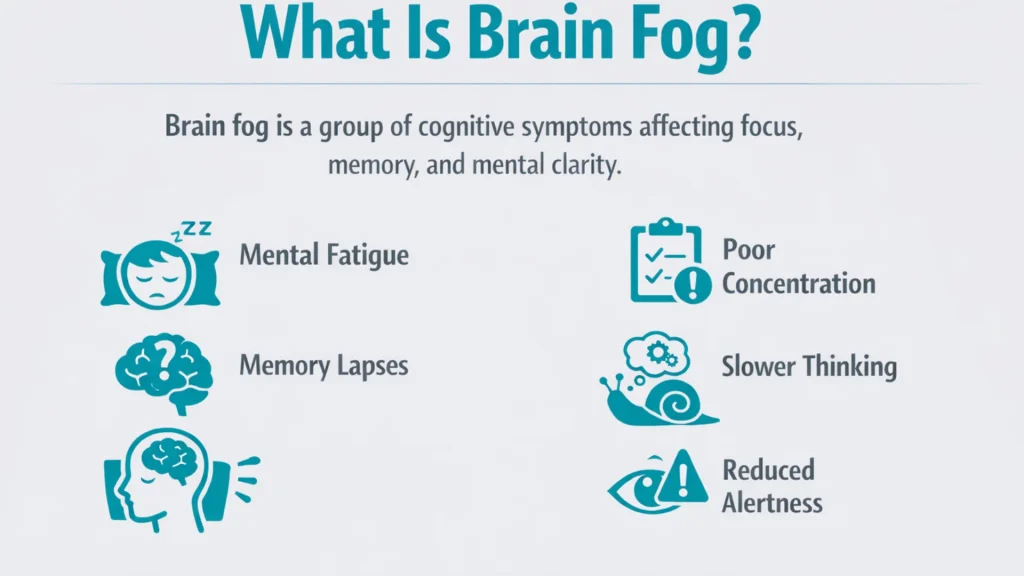
“Brain fog” is not a formal medical diagnosis. Instead, it describes a cluster of cognitive symptoms that can affect focus, memory, and mental speed. In other words, it’s a descriptive label people use when they feel mentally slowed down or less sharp than usual.
Sleep loss is a common contributor. The NHLBI – Sleep Deprivation explains how insufficient sleep can impair attention, memory, and decision-making. As a result, poor sleep can make brain fog feel worse.
Common Symptoms Associated With Brain Fog
Brain fog may involve:
- Mental fatigue
- Poor concentration
- Memory lapses
- Slower information processing
- Reduced executive function
- Difficulty staying alert
However, symptom intensity and duration vary.
Underlying Causes Behind Modafinil for Brain Fog Discussions
Many conversations about Modafinil for Brain Fog start with “what can I take?” rather than “what’s causing this?” Yet brain fog usually reflects an underlying issue rather than a standalone condition.
Common contributors include:
- Sleep deprivation or poor sleep quality
- Chronic stress
- Hormonal changes
- Post-viral fatigue
- Medication side effects
- Mood-related conditions
The CDC – Sleep Overview outlines how sleep impacts overall health. In addition, MedlinePlus – Sleep Disorders provides a broad overview of sleep conditions that may influence daytime alertness and mental performance.
How Modafinil Works for Modafinil for Brain Fog Context
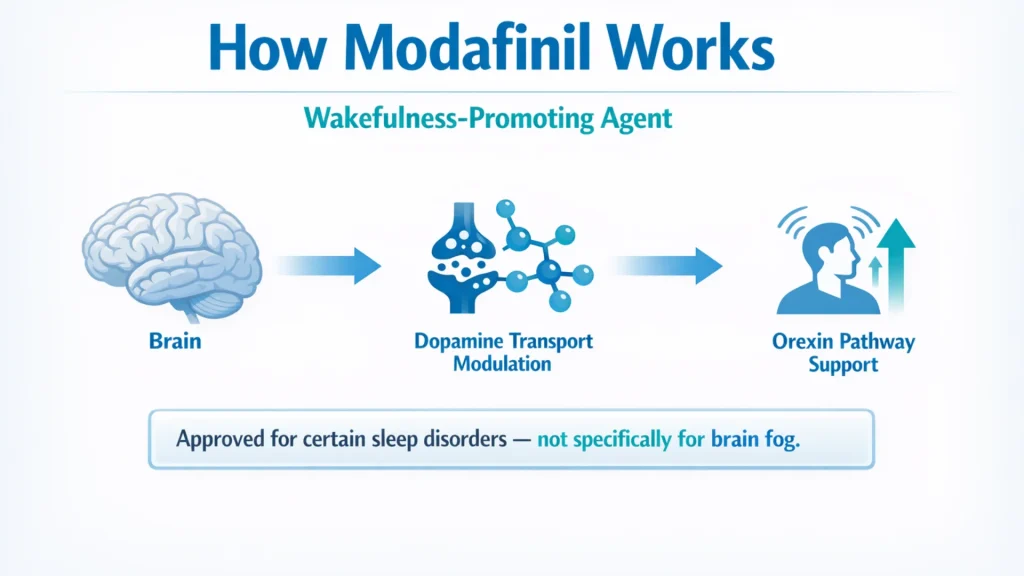
Modafinil is a wakefulness-promoting agent. In the United States and many other regions, clinicians prescribe it for:
- Narcolepsy
- Obstructive sleep apnea (residual sleepiness)
- Shift work sleep disorder
If you want a plain-language overview, read Understanding Modafinil and Its Mechanism of Action.
Mechanism of Action Relevant to Modafinil for Brain Fog
Clinical references describe Modafinil as influencing dopamine transport and orexin-related pathways associated with wakefulness. A structured summary appears in the NCBI Bookshelf – Modafinil Review.
Unlike classic stimulants, Modafinil tends to produce a different wakefulness profile. The FDA – Modafinil Approval Database lists approved indications and confirms prescription-only status.
Can Modafinil for Brain Fog Improve Cognitive Clarity?
People researching this medication often ask whether it treats brain fog directly. Practically speaking, perceived clarity may improve when the main driver is sleepiness or fatigue. However, outcomes vary, and the root cause still matters most.
When Modafinil for Brain Fog May Improve Alertness
Wakefulness support may be relevant when brain fog links to:
- Sleep-related impairment
- Circadian rhythm disruption
- Fatigue-driven attention problems
For shift workers exploring medication context, see Shift Work Sleep Disorder: Medication Options and Effectiveness.
Moreover, for a broader “work and output” discussion, review Modafinil and Productivity: How the Smart Drug Boosts Work Efficiency.
That said, Modafinil for Brain Fog does not correct nutritional gaps, hormonal imbalance, chronic stress, or mood-related causes. Therefore, it’s best viewed as a wakefulness tool in appropriate clinical contexts—not a universal brain fog solution.
Limitations of Modafinil for Brain Fog
Even when some people notice improved alertness, Modafinil for Brain Fog has clear limitations:
- It does not correct thyroid dysfunction.
- It does not resolve vitamin or mineral deficiencies.
- It does not “treat” stress or burnout.
- It may reduce sleepiness without addressing why fatigue occurs.
In addition, response differs from person to person. Consequently, medical supervision is important whenever prescription medication is involved.
Regulatory Status and Access for Modafinil for Brain Fog
In most major jurisdictions, Modafinil remains prescription-only. Therefore, individuals should verify:
- Local prescription requirements
- Importation and customs rules
- Controlled substance classifications (where applicable)
For informational browsing within an approved framework, see the Modafinil category page. Educational product information is also available for Modalert 200mg.
Risks and Safety Considerations
When used under medical guidance, Modafinil is generally tolerated by many patients. Still, side effects can occur, including:
- Headache
- Insomnia
- Anxiety or restlessness
- Increased heart rate
- Digestive discomfort
For a detailed safety overview, read Modalert 200 mg Side Effects and How to Avoid Them.
Because individual risk factors vary, consult a licensed clinician for personalized guidance.
Safer Alternatives Before Using Modafinil for Brain Fog
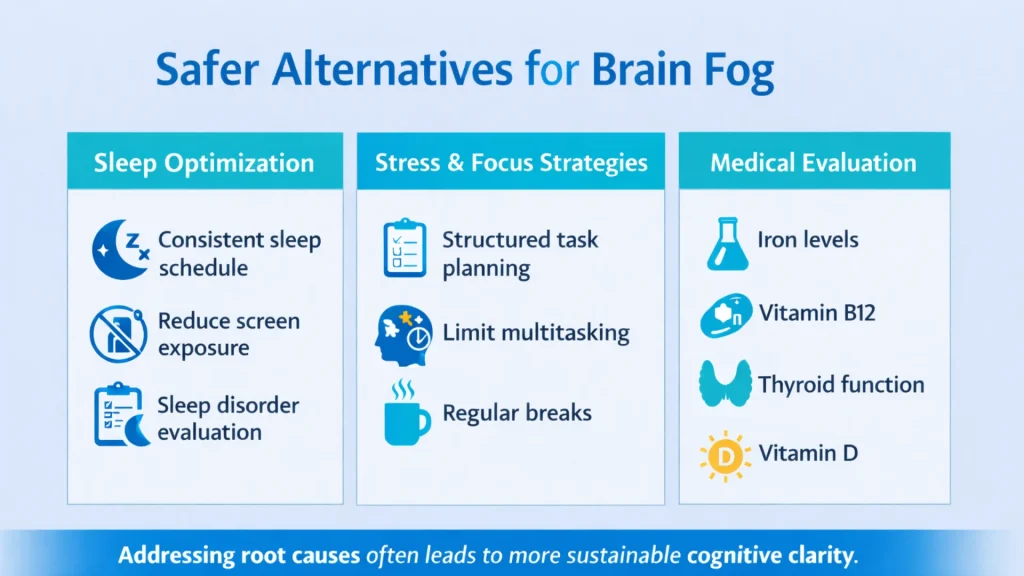
Before considering medication, many people see meaningful improvement by targeting fundamentals. In fact, these approaches often produce more stable results than “pushing through” fatigue.
Sleep Optimization Alternatives to Modafinil for Brain Fog
- Keep a consistent sleep and wake time
- Reduce late-night screen exposure
- Consider evaluation for sleep apnea if symptoms persist
Stress and Cognitive Strategies for Modafinil for Brain Fog Support
- Use simple task lists and time blocks
- Reduce multitasking
- Build short recovery breaks into demanding days
- Practice stress-reduction techniques that feel realistic to maintain
Nutritional and Medical Assessment
A clinician may evaluate common contributors such as:
- Iron status
- Vitamin B12
- Vitamin D
- Thyroid function
Overall, addressing these factors can improve clarity more reliably than masking fatigue.
When to Seek Medical Evaluation for Modafinil for Brain Fog Symptoms
Seek prompt medical care if you experience:
- Sudden confusion
- New neurological symptoms
- Rapid cognitive decline
Moreover, if cognitive changes persist and interfere with daily life, professional evaluation is a sensible next step.
FAQs
No. Regulatory authorities approve Modafinil for certain sleep disorders, not specifically for brain fog.
It may improve alertness in some fatigue-related situations. However, results depend on the underlying cause of symptoms.
Not usually. It does not correct nutritional deficiencies, hormonal imbalance, or chronic stress
Sleep optimization, stress management, and medical evaluation for deficiencies or sleep disorders are common first steps.
If symptoms are persistent, worsening, sudden, or disruptive to daily functioning, seek professional evaluation.
Final Perspective on Modafinil for Brain Fog
Modafinil for Brain Fog remains a nuanced and often misunderstood topic. While it may improve wakefulness in cases where sleep-related impairment drives symptoms, it does not directly treat the underlying causes of cognitive fog. In other words, increased alertness does not automatically translate into long-term cognitive restoration.
For individuals whose brain fog stems primarily from excessive daytime sleepiness, circadian rhythm disruption, or diagnosed sleep disorders, improved wakefulness may support better focus and task engagement. However, when symptoms arise from hormonal imbalance, nutritional deficiencies, chronic stress, mood-related conditions, or systemic illness, wakefulness alone may offer only temporary relief.
Therefore, sustainable cognitive clarity usually depends on identifying and correcting root contributors rather than relying solely on symptom management. A structured evaluation, improved sleep hygiene, stress regulation, and appropriate medical assessment often form the foundation of meaningful improvement.
Overall, this medication should be viewed within its approved medical context. Informed decision-making, realistic expectations, and professional guidance remain essential for anyone considering treatment options related to cognitive symptoms.
Key Takeaways
- Modafinil for Brain Fog may improve wakefulness in specific fatigue-driven contexts.
- Brain fog is a symptom cluster, not a standalone diagnosis.
- Sleep disruption commonly contributes to cognitive symptoms.
- Prescription status and regulations vary by country and require compliance.
- Root-cause strategies (sleep, stress, nutrition, evaluation) often provide longer-lasting improvement.